Sample text 123
Information Systems
Information systems students learn to design, deliver, and use information and communication technologies to solve problems for companies, governments, and society.
Bachelor of Science in Information Systems
Information systems at CMU combines aspects of computer science, information technology, and business management with a humanities and social sciences based education to provide you with an uncommonly well-rounded portfolio.
Information systems at Carnegie Mellon:
Graduates are uniquely positioned for an impactful career in an increasingly digitized and connected world, able to adapt to rapid evolution across industries.
Computer science students have identical graduation requirements as students at Carnegie Mellon in Pittsburgh. Graduates have CMU degrees, conferred from the main campus.
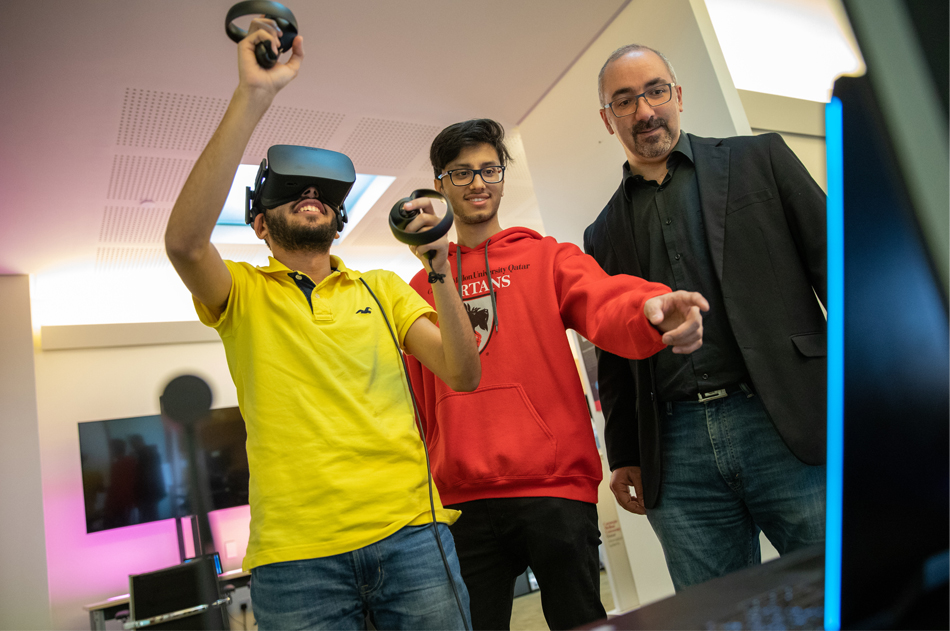
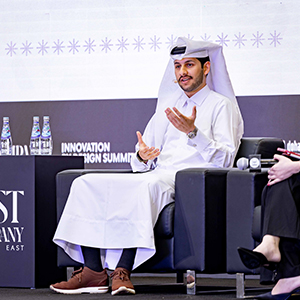
“The CMU-Q student experience is unique. Throughout your time as a student, you are encouraged to take what you learn and apply it into real life projects.”
Mohammed Al-Qassabi, Class of 2022, Senior Security Data Scientist,
QatarEnergy
Program at a Glance
Students build a solid foundation in computing, communications, and software development, while also studying social sciences and organizational theory to develop critical thinking and understand the human impacts of technological change.
The curriculum includes:
The flexible nature of the program encourages students to explore their interests. Through concentration areas or approved minors, students can specialize in the IS field of their interest, including information security and privacy, data science, or digitalization.
Through several semester-long, team-based projects, students gain the experience of working with a real-word client and developing a mobile app, technology solution or systems idea.
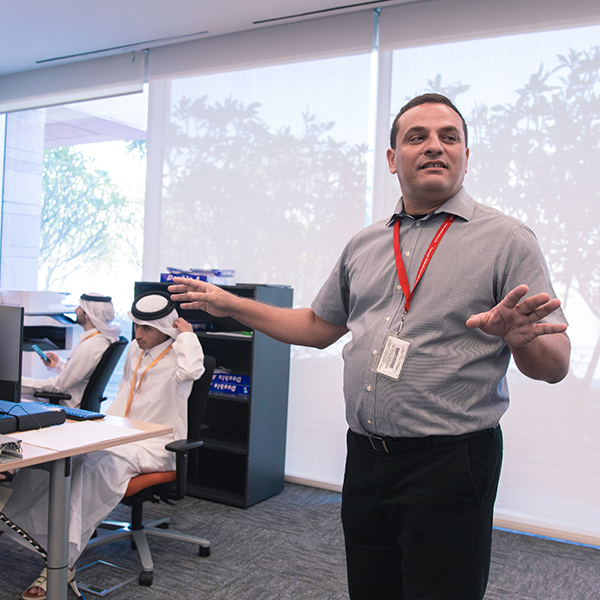
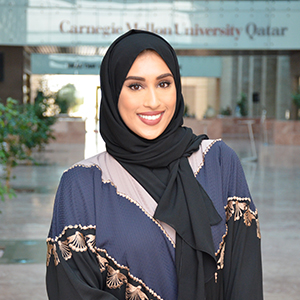
“Being part of CMU-Q was a defining moment in my life. As a student, I was constantly encouraged to seek knowledge from various disciplines beyond my own. The skills I gained at university helped me become more innovative and technology-focused.”
Maryam Al-Naemi, Class of 2018
Senior Systems Engineer, Qatar Energy, Founder of Kaffeinated Festival
“Being part of CMU-Q was a defining moment in my life. As a student, I was constantly encouraged to seek knowledge from various disciplines beyond my own. The skills I gained at university helped me become more innovative and technology-focused.”
Maryam Al-Naemi, Class of 2018
Senior Systems Engineer, Qatar Energy, Founder of Kaffeinated Festival
The Bachelor of Science in Information Systems curriculum includes professional core courses that teach students to analyze, design, implement and test information systems using current and emerging organizational and technological practices. Several of these courses are project-based, in which small groups develop solutions to real information problems.
The program exposes students to the areas fundamental to understanding problems in information systems: organizations, decision making, research methods and professional communications. Courses in mathematics, statistics and computer programming provide students with strong quantitative skills to meet the technical demands of the discipline.
The flexible nature of the program encourages students to explore their interests. Students may specialize in information security and privacy, data science, or digitalization.
Standard Completion Time: 4 Years
Concentrations or approved minors provide students with the opportunity to develop a deeper understanding in an IS field of their interest.
Information Security and Privacy
The Information Security and Privacy concentration exposes students to the key technical, process, and policy aspects related to information security and associated privacy concerns. The student who completes this concentration will have a solid foundation in the area and will be prepared to continue developing expertise through graduate school or their professional career.
Data Science
The Data Science concentration prepares students to capitalize on the continuously expanding quantity of data generated through our interconnected information systems. Students develop an understanding of how to store, process, retrieve, and analyze data so they can derive insights and improve decision making for individuals, organizations, and society. The foundation developed in this concentration prepares graduates to assist organizations to harness the data they generate, as well as to support research projects either as a graduate student or within a chosen profession
Digitalization
The digitalization concentration prepares the student to understand and effectively innovate with information systems to support entrepreneurship, organizations, or society. Graduates with this concentration often work in a larger organization or they create new organizations that capitalize on the benefits of information and information systems.
Information Systems students put theory into practice through semester-length, team-based project courses.
In these courses, students gain valuable experience managing complex projects, working closely with teammates and client organizations, and dealing with the ambiguities inherent in every large-scale project.
Career Pathways
Typical career fields for new information systems graduates include project managers, IT and risk management consultants, entrepreneurial ventures, business analysts, web and mobile application developers, application designers and user experience testing.
Region
Meet the Faculty
Faculty members include experts in database systems, Geographic Information Systems (GIS), human-computer interaction, healthcare analytics, social media diffusion, smart cities, software engineering, and sustainability management.

Simon Faulkner
Assistant Teaching Professor, Chemistry

Amirah Mohamed Al Sarraj
Library Associate, Collection
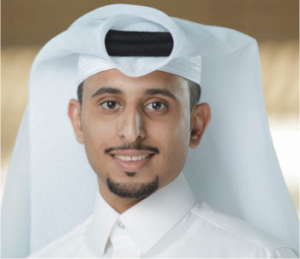
Mohammed Al-Sadi
Teaching Assistant, Information Systems
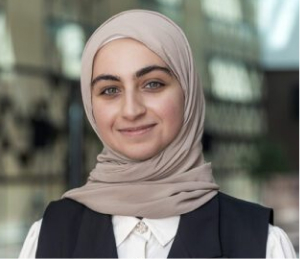
Sara Al Sabbagh
Teaching Assistant
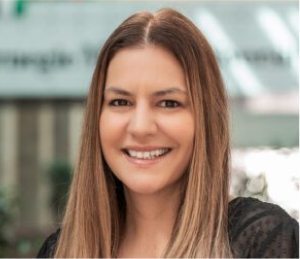
Dina Al Abdi
Program Director of Student Engagement

Mohammed Al-Sadi
Teaching Assistant, Information Systems
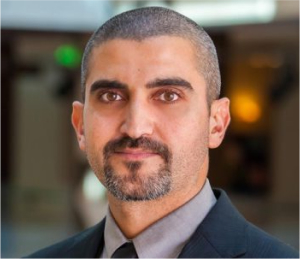
Mohamed Al Khudari
Receptionist and Administrative Coordinator